
40 National Groups Want Action on Energy!
Calgary Herald by Dan Healing. Repairs at the Horizon oilsands upgrader near Fort McMurray are expected to cost between $350 million and $450 million and half of the plant is to be ready to commission by by mid-June, owner Canadian Natural Resources Ltd. reported Thursday.
The Alaska Standard by Pete Sepp. Senate Majority Leader Harry Reid (D-NV-PPG $3.91) is pushing for a vote in the Senate to target the energy sector with tax hikes disguised as the elimination of “subsidies.” These tax increases would in no way reduce pump prices, but instead increase them, while eliminating thousands of jobs and depriving the U.S. of secure, reliable energy sources within its own borders and waters. A study by LSU Professor and Economist Joseph Mason found that repealing these longstanding provisions, known as ”dual capacity” and Section 199 (available to many industries), would eliminate more than 150,000 jobs in the U.S, including over 300 in Alaska. Additionally, state economic output will be cut by $1 billion – certainly not the right direction for Alaska or the nation just as we’re emerging from a recession. So why then is the President and his Congressional allies pushing for these increases in response to high gas prices? The answer is simple: politics.
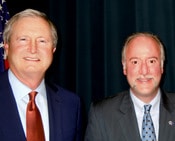 Comment. Wednesday the World Trade Center Alaska hosted Jim Albaugh (NGP Photo with WTC Executive Director Greg Wolf), Executive Vice President of the Boeing Company and President and CEO of Boeing Commercial Airplanes whose topic was, "Boeing and American Aerospace – Keeping Our Lead."
Albaugh reminded the audience of his company’s attachment to Alaska: over a hundred employees are supporting Fort Greely’s national ground based missile defense program. Alaska hosts the largest per capita population of pilots in the country. And, Alaska Airlines is one of Boeing’s best customers.
This corporate diplomat struck a careful balance between hope for the future of technology in America and fear that without some changes in educational and other priorities a delicate process could fail. He described the complex string of technology from the design and research stages to marketing, logistics, manufacturing, distribution and maintenance — processes currently operated by employees at or approaching retirement. "If you lose any element along the build-design-produce continuum," he said, "it would be very difficult to replace that process later."
With 10% of America’s GDP dependent on technology and 6% of GDP provided by civil aviation, assuring that young Americans retain technical competence is critical. However, educational competence is lowering as competing countries improve their educated work forces. Albaugh said that with diminished federal government interest in the design and production of new airplanes and space programs, fewer young people see aerospace and related technologies as providing a secure and attractive future.
We observe that over half of Alaska’s North Slope workers are eligible for retirement. The oil and gas industry is a big economic contributor — not just to Alaska, but to America — providing 7.5% of GDP and over 9 million jobs. If the federal government’s energy policies continue to shut down oil and gas potential developments and if the State’s investment policy — predatory taxation — continues choking new oil and gas projects under state control, Alaska is in danger of outsourcing the very engineering and oil and gas graduates it is currently turning out in its professional and vocational degree programs.
It is interesting to note that both the Aerospace and oil and gas fields, that contribute so mightily to the U.S. economy, attribute a portion of their challenges to government policy challenges. If the country and state can reshape their policy priorities, perhaps the various technology fields can begin attracting new, young go-getters–instead of rerouting them to careers in other parts of the world where technology, manufacturing, energy, mining, work ethic and education are becoming  highly appreciated, nurtured and respected. -dh

Leave A Comment