
Notes from the road commentary…. Last night, Governor Sean Parnell arrived in Mississippi, met with leaders of the Interstate Oil and.jpg) Gas Compact Commission (IOGCC) and attended a dinner in preparation for his formal appearance this morning. (NGP Photo, with Lisa Ivshin, Executive Director of the hosting Mississippi State Oil and Gas Board.)
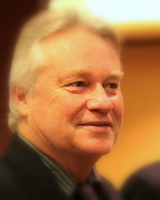 The IOGCC is a Congressionally chartered non-profit organization of about 38 oil and gas producing states whose official members are governors of those states and their oil and gas conservation commissioners. In Alaska’s case, the Alaska Oil and Gas Conservation Commission Chairman Dan Seamount (NGP Photo-l) represents Alaska. Commissioner Cathy Foerster is also active in IOGCC and chairs the Council of State Regulatory Officials whose role it is in every conference is to provide state production and conservation reports. Last May, Governor Sarah Palin Chaired IOGCC and hosted the spring meeting in Anchorage. Lieutenant Governor Parnell attended that meeting with the other AOGCC Commissioner John Norman.
Today, Governor Parnell will join Mississippi Lt. Governor Phil Bryant and IOGCC’s current Chairman, Governor Brad Henry of Oklahoma in an opening governor’s roundtable discussion of energy issues.
Other Alaska officials participating in meetings include Oil and Gas Director Kevin Banks, AGIA (Gas Pipeline) Coordinator Mark Myers and the Governor’s Special Assistant for several departments, including Natural Resources, Pete Kelly.
Your author, Dave Harbour, will be addressing IOGCC officials at noon on Tuesday as a member of the Consumers Energy Alliance Board of Advisors. Harbour, a former Alaska regulatory commissioner served with the National Association of Regulatory Utility Commissioners (NARUC) Gas Committee and as NARUC’s Official Representative to the IOGCC.
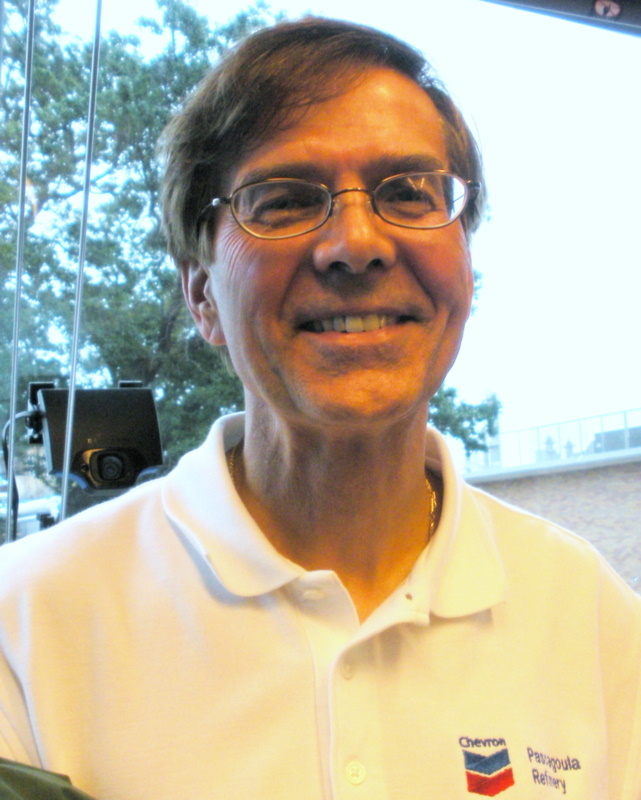 Before dinner last night, IOGCC members traveled to Pascagoula for a refinery tour ably and warmly hosted by Jim Blevins (NGP Photo) the Chevron Pascagoula Refinery General Project Manager.
Chevron’s Pascagoula operation is a refinery of superlatives. It is one of the newest refineries in the country, constructed in 1963. That compares with other refineries build as long ago as the end of the 19 and beginning of the 20th centuries. It is one of the largest and most complex refineries in the country. Sitting on 3,000 acres the refinery proper occupies a third of that land and refines about 330,000 barrels of mostly Mexican crude oil per day. When Alaskans consider for a moment that 330 thousand Bbs/d is about half the throughput of the Trans Alaska Pipeline, it is less suprising that Pascagoula supplies customers from Houston to Miami. About 65% of the plant’s gasoline, diesel, jet fuel, liquefied petroleum gasses and other products leave the plant by ship, while 30% finds home at the other end of product pipelines and 5% is dispatched by rail and truck.
After viewing the plant, its 17′-above-sea-level earthen and concrete anti-hurricane floodwater dams, its power and steam plant, its complex heat exchangers, distilling towers, water and air cleaning technology and spaghetti-like ensemble of hot and cold pipes connecting production facilities with one another and with storage tanks; and after coming to appreciate small profit margins along with the statutory and regulatory burdens borne by refineries like this, one wonders no longer why the United States has not attracted many refinery investors in the last 40 years. -dh
Note: If you missed Governor Parnell’s WSJ and Alaska Dispatch Op-Ed, see it here.

Leave A Comment